
 Apple Podcasts
  Spotify
  Amazon Music
  Podcast Addict
  Youtube Music
  Audible
  Goodpods
  Castbox
  Overcast
  Deezer
  Podchaser
  PlayerFM
  Castro
  TuneIn
 Janet Ellis, the Blue Peter presenter, actress, novelist and new President of Humanists UK, talks to James Hodgson about how she came to humanism, why she finds real comfort in the fact that life is finite, and how to find joy without guilt in anxious times. She discusses her Humanists UK film All We Have Is Each Other, grief after losing her husband, whether Blue Peter was quietly humanist, talking to children about belief without indoctrination, the joy of writing, assisted dying, and why more humanists should say so openly.
Support Humanism Now & Join Our Community!
Check out our new website! www.humanism.now
"I genuinely find comfort in the fact that life is finite." — Janet Ellis
She shaped the childhoods of millions on Blue Peter, and now she's making the case for living well without religion. Janet Ellis, broadcaster, actress, novelist and the new President of Humanists UK, joins James for a warm, wide-ranging conversation about how she came to humanism, what it offers in turbulent times, and why she finds genuine comfort in the idea that this life is the only one we get.
We talk about her film All We Have Is Each Other, grief and mortality after the loss of her husband, finding joy without guilt, whether Blue Peter was quietly humanist, how to talk to children about belief without indoctrination, the joy of writing, and her hopes for her time as President.
About the guest
Janet Ellis MBE is a broadcaster, actress and novelist, known to generations for presenting Blue Peter and Jigsaw. She is the author of the novels The Butcher's Hook and How It Was, hosts the podcast Twice Upon a Time, and in 2026 became President of Humanists UK.
Links and references
- All We Have Is Each Other, the Humanists UK film with Janet Ellis: https://humanists.uk/janetellisfilm/
- Janet Ellis, Humanists UK profile: https://humanists.uk/about/our-people/patrons/janet-ellis/
- Twice Upon a Time, Janet's podcast on favourite childhood books (@twiceuponapod): https://linktr.ee/twiceuponpod
- Instagram: https://www.instagram.com/missjanetellis/
- Substack: https://janetellis925764.substack.com/
- Janet's novels: The Butcher's Hook (2016): https://www.goodreads.com/book/show/35407568
- How It Was (2019): https://www.goodreads.com/en/book/show/45901019-how-it-was
In this episode
- Her slow realisation of being a humanist, joining Humanists UK, and stepping up from patron to president
- Grief, mortality and the film All We Have Is Each Other: why she finds comfort, not fear, in a finite life
- Finding joy in turbulent times, talking to children about belief without indoctrination, and a call for humanists to be "out and proud"
Chapters:
00:00 Introduction: meet Janet Ellis
01:10 A slow realisation: discovering humanism
02:47 From patron to President of Humanists UK
05:07 Being publicly affiliated, and the conversations it starts
07:53 "All We Have Is Each Other": grief and a finite life
11:45 Finding joy in turbulent times
18:45 Blue Peter: was it a humanist show?
23:07 Talking to children about belief without indoctrination
27:18 Books that shaped her worldview
32:05 The joy of writing
36:53 Her hopes as President of Humanists UK
44:24 Closing question: changing minds
Key takeaways
- Janet Ellis describes becoming a humanist as a slow realisation rather than a sudden conversion. She joined Humanists UK around 15 years ago after a friend she admired told her he was a member, became a patron in 2014, and is now President for a two-year term.
- After the death of her husband six years ago, she says she finds real comfort, not fear, in the fact that life is finite: "This is it. This is us. This one life."
- Humanism does not blunt emotion. Joy, music, art, fresh air and friendship are open to everyone, and pleasure that harms no one needs no guilt.
- Blue Peter was never designed as a humanist programme, but Janet sees it as even-handed on religion and belief, gender-equal in who did what on screen, and driven by what children themselves wanted to see.
- With children, answer the question they actually ask, keep it simple, and avoid an "us and them" view of religious people. Children respond better to a puppet theatre than a soapbox.
- Her ask of humanists during her presidency: be more open about it, connect your achievements to your humanism, and if humanism describes what you already think, simply join.
Frequently asked questions
Who is the President of Humanists UK?
Janet Ellis, the broadcaster, actress and novelist best known for presenting Blue Peter, became President of Humanists UK in 2026. She had been a patron of the charity since 2014.
How did Janet Ellis become a humanist?
Gradually. From her teens she was puzzled by the idea that life is a rehearsal or preordained. She described herself as a humanist for years before joining Humanists UK, prompted by a friend she admired.
What is the film All We Have Is Each Other?
A 2026 Humanists UK film starring Janet Ellis about finding joy and meaning in a finite life and in our connections with each other.
What campaigns does Janet Ellis care about most?
Assisted dying, ending faith schools, removing the automatic seats of bishops in the House of Lords, and legal recognition of humanist marriages.
How should humanist parents talk to children about religion?
Janet's advice is to answer only the question asked, give a simple honest answer ("I don't go to church because I don't believe in God"), leave space for follow-up questions, and never frame religious people as the other side.
Support Humanism Now & Join Our Community!
www.humanism.now Follow @HumanismNowPod | YouTube | TikTok | Instagram | Facebook | Threads | X.com | BlueSky
Humanism Now is produced by Humanise Live, a podcast production agency based in London, serving charities, companies, and individuals across the globe. Contact us to get started in podcasting today at humanise.live or hello@humanise.live.
Music: Blossom by Light Prism
Podcast transcripts are AI-generated and may contain errors or omissions. They are provided to make our content more accessible, but should not be considered a fully accurate record of the conversation.
Learn more about your ad choices. Visit megaphone.fm/adchoices
James Hodgson: Welcome to Humanism Now. I'm your host, James Hodgson. Here at the podcast, we often talk about how much it matters when public figures stand up for what they believe in. The power of endorsements, the value of affiliation from household names, and the vital role of secular voices in our public life. Janet Ellis is a beloved broadcaster who shaped the childhoods of millions on shows like Blue Peter and Jigsaw. She's a celebrated actress, a critically acclaimed novelist and the host of her own podcast, Twice Upon a Time. And I'm delighted to say that Janet is also the new president of Humanists UK and dare I say, a national treasure. Janet Ellis, thank you so much for joining us. Welcome to Humanism Now.
Janet Ellis: Thank you and reluctantly and humbly, you dare say it.
James Hodgson: As recently announced, you are the new president of Humanists UK. I'd love to dive into a little bit more about why you felt this role was right for you at this time. But perhaps we can go back to when you first encountered humanism and when you felt that it was an identity that spoke to you.
Janet Ellis: Yeah, it's always interesting, isn't it, asking fellow humanists this question? Because the answer I get most repeatedly, and certainly the one I give most repeatedly, is that it's a slow realization. I'm always aware in these conversations that some of the terms I use to describe things are possibly straight out of the Bible, but nevertheless they're in the lexicon. So I will say straight away, there was no Damascene moment. However, I realized from quite an early age that I was, if not uncomfortable, then puzzled by the notion that this time we have here is something of a rehearsal. And not only is it a rehearsal, but according to some doctrines, it's preordained. So no matter what you do and where you go, it was all planned anyway. And even as a certainly a teenager, I found that a very puzzling idea. but it wasn't until comparatively recently that I had gone from describing myself as a humanist to fully embracing Humanists UK and joining up. I joined up about 15 years ago. And this is where peer pressure comes in. Somebody I really like and admire told me that he was a member of humanists, and I thought, I didn't really know there was a proper place for this. And then of course discovered that not only is humanists full of humanism, Not only is humanism full of nice and like-minded humanists, but it's also a charity that does the sort of work, supports the sort of causes that I already espoused. So it seemed like a really good and neat way to put everything together.
James Hodgson: And then you took the next step to be a patron in 2014, is that correct?
Janet Ellis: Yes, that was just a kind of that's nice, you know, that you always feel I don't know about you but I like being a member of a club or a tribe. I thought, that's nice, because that means that I will be able to go to any of the lectures that organise 'cause there is often I think something of a prevailing notion that humanists meet, and the nearest analogy I suppose is Quakers, you know, that we all sit in a circle and affirm our lack of belief in God and then I don't know do something else. And of course it does not work like that. Humanists UK works tirelessly, I will say, to fund and manage and promote causes like the abolition of the voting rights of bishops in the House of Lords, the abolition of faith schools, the celebration of marriage being recognised here as it is indeed in the adjacent isles and countries. And also the assisted dying bill and all of those causes I had got behind anyway. So it was a really good fit for me. I was surprised, I think that's proper, to be asked to be president, and I said to Andrew Copson, the CEO. But I don't really know any members of the board. And he said, we can put that right. He said, it's unanimous, by the way. And I well, that's lovely, but I would still like to for people to know who I am, you know, aside from meeting me at some talk interesting as they are. and the members of the board were incredibly welcoming, and sensibly I think it's a two year tenure, which I really, really get behind because hopefully it means that I can make something of an impact in those two years about helping people to get to where I am, you know, to supporting causes and then giving it a name and getting behind those causes and it's properly, properly done. I mean Humanists UK, like a lot of charities, like probably most of them, is staffed by people who are passionate, committed, really good fun, and work harder than most people on this planet towards those endpoints and impressive, really impressive bunch of people. So I feel really honoured actually to be even in a small way contributing to the public face of Humanists UK.
James Hodgson: That's wonderful to hear. And in terms of being publicly affiliated, it's one thing to privately identify and even join as a member. I just wondered, were there any particular considerations of being initially the patron and now the president in terms of being publicly affiliated and supporting the humanist cause? And has it also started any... interesting conversations for you in the same way that said you were slightly inspired by a friend.
Janet Ellis: So many, so many. I mean it's a good thing I think to have to defend sometimes robustly things you think. Because one thing I've come across, and I don't know whether this happened to you, is an absolute definition of what humanism is. And I think it's a way of thinking myself, it's a way of connected thinking, connecting you to other like minded people and indeed to the ways and wherefores of the place that we currently and briefly inhabit. But I have had really interesting conversations, and at the beginning I always say, and I will say it now, that unless a religion punishes or is cruel or ostracises any particular branch of society, I don't mind what people think and believe. You know, whatever gets you through, to be honest. I don't, I'm not anti-religion. But I am very anti not exploring full choices, which is why you know the abolition of faith schools is key to me. I just find it absolutely inexplicable that children are given absolutely no choice in how they think and feel and respond to a world that only really seeks to welcome them. but I quite enjoy the fact that I'm constantly having to think like this about what it is, what it means, what we do, and what it might mean for the future. Because I think those are conversations that are a privilege to have. Most of us don't get to have them in our normal life where you get cut off pretty quickly if you start them. But I genuinely am fascinated by other religious beliefs and I'm not in any way anti them. And in fact, very early on I was on a filming trip and we went into a little town towards a church and somebody said to me, are you still allowed in? And I you know, that's sweet. That's very sweet. And I thought, well, first of all, yes, and also, you know, church architecture, like a lot of church music, is absolutely stunning. And I don't want to deprive myself of that experience simply because I don't happen to think that somebody else gave permission for it all to happen. But as I say, broadly, I'm enjoying this and I don't it hasn't made me feel defensive, which is a really good outcome.
James Hodgson: And you've produced this wonderful film with Humanists UK, which was released recently, entitled All We Have Is Each Other, which I think really sets out that view that you've outlined there. And we'll include a link to that in the show notes. It's a joyous film, but it's very much about the finitude of life and marrying those two ideas, I think. How did those two seemingly contradictory ideas sit together for you?
Janet Ellis: Well, it's a massive question, isn't it? How we all feel about death. And inexplicably really, considering that it is a thing that unites us absolutely without any kind of opposition. we have somehow managed to inherit very, very neatly a Victorian idea of death, dying, mourning and grief. And they don't fit with how I feel about it. And if anything was going to test this, obviously it was losing my husband. He died six years ago and he felt like me. That we'd had and have a really lovely time together. You know, he is present for me in my thinking and, you know, very much guiding me in the way that he lived and thought. But we did not think we were going to see each other again. And we made the most of our time here. And I am comforted by that. And I think that's always an important thing for me to try and get across that this doesn't come out of a position of fearfulness. I'm not crossing my fingers, I'm not hedging my bets, I genuinely find comfort in the fact that life is finite. And those sort of tests are obviously things that I don't even regard as a test because that was already how I thought and I've completely followed through. I think the reverse is more puzzling really, that people can have terrible things happen to them. Terrible things. And somehow feel that was meant, ordained, guided, and decided by an outside force. And that is so in opposition to my thinking that obviously things happen the way that our bodies and our lives, and indeed our countries and our politics is designed, often culminates in a bad outcome. But that's it. That's just part of them. big old way that we get through our small time on this planet and in no way, shape or form to me and obviously to a fellow humanist is that designed by someone else or taking responsibility for it by something or some force. But I think that's the thing that most people find hardest to connect to is the comfort of thinking this is it. This is us. This one life. And I'm glad it has a name. I'm really glad it has a name because you know to go back to your first question, I thought it without really naming it. I knew that atheism didn't fit because I'm not anti something. I'm incredibly pro life and people. And even when it doesn't work out as you'd hoped, it's still this most precious thing, this most precious time. And like I say, that's a comfort and you know, my marriage to John. He's still a comfort to me, but that's it.
James Hodgson: There are many difficulties, challenges that people face and the news media climate that we live in is making finding comfort and joy seemingly harder, I think. I'd love to get your views on that, but also... Where do you yourself, or what would you suggest others kind of focus their attention to find the joy and the comfort day to day?
Janet Ellis: Yeah, I mean there's huge advantages to how connected we are. I'm huge and I find it still extraordinary that I can, you know, face time a grandchild and that I can organise things easily with a few button presses. I've had to be shown how to do them, of course, let's be honest here. But I do know how to do it and I find it extraordinary that somebody invented the technology. Still extraordinary. You know, the idea when I was little, the idea of even having a television in my bedroom felt incredibly other and exotic. And now being able to effectively, you know, if you want to, take your television to bed with you, unbelievable. But I think it also means that we're aware of everything all the time. Everything. Everything comes in. Everything comes in. And I'm as keen on the next person. I never do without the news. I'm not one of those people who goes on holiday and says, that's you know it's happening somewhere else. I can't do that. I still, you know, get an online newspaper and I still read comments around things that I'm interested in. But the unavoidable nature of things over which we have no connection, you know, a terrible natural catastrophe somewhere, you know, all you can do is support it in a small way financially, but you have no connection. You know, usually you have no connection. But it lives with you. You know, these things live with you, they inform your daily life, they literally rock your world. And I think We're at the mercy of it if we let ourselves be at the mercy of it. And I, you know, that's obviously having five, well actually now six, but Alba won't be able to use a phone for a while. You know, six grandchildren. I don't want them to be afraid of the world. That to me would be the worst possible outcome to having extraordinary advances in technology. That a world that it was meant to be introducing them to, in fact, confined them to feeling fearful. but you can't escape the fact that awful things are happening and they make the most noise. You know, the bad news always gets precedence. But I think that we are lucky in that our brains are also wired to find pleasure. However bad the news is, however powerless you feel, however much the political stripe doesn't serve your purposes. Food still tastes good, fresh air still feels nice, friends are still available, music still touches parts of you that other things can't. Looking at art, like in this country you can go to galleries for nothing. That's extraordinary too. But you can certainly walk round your village, your town, the local field, wherever gives you comfort to be out in it and away from the possible distractions of home. But I don't want to be all twee about it, you know, 'cause some people love listening to podcasts when they go walking. I don't actually, I prefer to have the sounds of nature and where I live occasionally the sounds of a plane coming into land. But you know, it's still all part of the rich experience. But I think we have to teach ourselves and certainly the next generation to distinguish things that really affect you, skin in the game affect you, and things that you have to know about simply because they're also part of someone else's human experience. In other words, it's always been like this. You know, if you let what used to be called the troubles of the world weigh heavy on you, you will never experience pleasure in anything else because you will always have the wrong feelings about that pleasure. I'm always I never reply to those things and say what's your guilty pleasure because I think unless something actually harms someone Else or does something without their consent. Pleasure is pleasure. It might be weird for you, but so long as nobody gets hurt or you know gets restricted by it, it's a pleasure, you know, whatever it is. Watch what you like, listen to what you like, eat what you like, don't feel guilty about it. But also relish the fact that we do have these extraordinary senses, you know, and those of us that are lucky to have all five. I mean, really, you know, that's a head start. But of course, for anyone living a less, what can I say, less privileged, less open life, of course there are going to be privations that affect them in a very different way. But again, I still want to say in humanism there is joy. And I feel very strongly that there is an idea that humanism somehow blunts emotion. because the things that you feel might have a basis in something called spirituality because those are huge feelings. They come from nowhere and actually don't serve much useful purpose beyond getting you through the day. That therefore something divine or other must be in charge of that. And I absolutely don't think that, you know, I think that just as we are able to feel cold from hot, we are also able to feel joy. in things. You know, we have the receptors to do it. So please find your joy, I guess. And don't be afraid of it. There was such a mood in the particularly in the nineties of making enjoyable things ironic. Nothing felt genuine anymore. Everything had to be done with a sideways glance so that you couldn't genuinely just have a silly old good time, you know, it had to somehow have inverted commas around it. And I think that's I think, I hope that's beginning to go. And that the pure pleasure in things that have no real, you know, possibly financial benefit or don't even sometimes involve anyone else are still just as beneficial to you as the biscuit you like best.
James Hodgson: Wonderful. You mentioned your grandchildren a couple of times there. And I think if you ever want to see what authentic joy looks like, you do just need to spend time with young children and learn a bit from them.
Janet Ellis: Yeah, absolutely. And also, you've only got to spend an afternoon with children. I mean mine range in age from twenty two down to fifteen months. So you often get the naked side of human interaction as well. Let's say the less thoughtful. but it's certainly genuine, that's for sure. And, you know, just as I'm hoping that they all get their more than their fair share really of choice and hope and chance in life. I also don't want to suppress anything in them that ever feels this is good. You know, don't punish people for appropriating their own fun. That's you know and you're right. Watching children is the quickest route to that because they really go for it and they just don't have any qualms about who's watching what it looks like. They just go for it.
James Hodgson: Of course you have a career of communicating to children and we should mention for international viewers that Blue Peter is something of an institution here in the UK and as we say, formative to generations of childhoods. I wonder what, would you describe Blue Peter as a humanistic show and did it help develop some of these ideas for you in terms of, you know, communicating big ideas, difficult concepts to children.
Janet Ellis: I don't think in the best way that Blue Peter set out to be anything in particular apart from a magazine show reflecting a world that it was worth growing up in, you know. The appeals every Christmas, and again for people who aren't familiar with it, every Christmas Blue Peter launched an appeal, and it was never a money-raising appeal. It was always something that children could get hold of or do themselves. So whether it was collecting bottle tops or organizing bring-and-buy sales, obviously eventually got that got turned into ready cash, but not at the hands of the children at all. And it was always something that any child watching, and you know, in my day it was like seven million of them, could do. And one of the most impressive of things actually the first year I joined was launching an appeal and almost by the time we'd finished the address of where to send everything to, you know, the thing started arriving. It was extraordinary, extraordinary. And it came from the children and often the although I'm sure charities pitched, I wasn't involved in the office management here, but also I remember one year we did we alternated between international and homegrown appeals. And one year we were raising money for lifeboats. Blue Peter sponsors a number of those semi-inflatable lifeboats inshore around the coastline. And they deteriorate, so we were raising money through collecting let's say milk bottle tops. and then live aid happened and Bob Geldof's appeal. And he came onto the program and said, I want you to support this too. So for the first and only time we had two appeals running because everybody wanted to support it. So I don't think the agenda was in any way setting out to be humanist. Although I can now see that not only was it pretty, pretty equal in terms of coverage of other religious practices and none, but it was also really feminist in that there was never any when the items were the filming items, the studio items were given out, it was regardless of the gender of the presenter. And actually, although I'm a lifelong feminist, even that didn't really strike me at the time. I think when I joined the program it had already been running for 25 years. And it is now, well it must be mid-60s, I guess. but it was a firmly established format and for the years I did it certainly was on twice a week. Every program was live And the viewers dictated at least 75% of the program's content. And of course they were not choosing items based on any agenda at all, because joyfully most children don't have one. They just want to see something on screen that they know about and want to know more about. So yeah, if I'm gonna cherry pick, I would say yes it was. and even though, you know, at on the Christmas programme we would have a local school choir coming in and singing a Christmassy song, and then it would always go down to a little wooden nativity which had been gifted to the program way before I joined, way before I joined. But it was not in any way this is the way to do Christmas and I really respected that, you know, 'cause we I didn't come from a church going family and I you know might have gone I like the I like the songs, so I might have gone in to sing some carols. But I wouldn't you wouldn't have gone to in that mass or anything. But I never felt and this is obviously only with hindsight because when you're doing ninety programmes a year you don't have much choice and chance to analyse, but I truly feel that it wasn't in any way dictated. I never felt the heavy hand of anyone saying, I think we should cover and maybe we should give them an idea. Nothing was ever ring fenced in terms of that sort of thinking, loosely religious or even vaguely spiritual. It wasn't. It was much more practical than that actually.
James Hodgson: Yeah, I think it's interesting. we, I think as humanists generally, we're quite, we hesitate at the idea of sort of suggesting that our children will be humanist children and that we should, you that they should naturally inherit our views. But I've had a couple of guests on the podcast who have made the claim that instinctively, children share many humanist values, like that's kind of their natural. state, not to put a label on it, but the curiosity, the potentially the irreligiosity, you know, that's learned, the empathy that we might advocate for. So I wonder what your view is on that, whether you think, you know, what's the right age perhaps to start introducing these ideas, or at least, you know, how to be open about this is what I believe when you're talking to the next generation without, you know, verging anywhere near indoctrination.
Janet Ellis: Yeah, I don't think there's an age, do you? I think it's simply that children will possibly come home from school with an idea, about some story they've been told in class about a man called Jesus or, you know, something vaguely like that. they will want to know what you think. But I don't think they come home bursting with this doesn't fit with where I am in my home at all. And I always a believer in that. When a child asks a question, only answer that question. you know, if they say babies come from it, just tell them literally and if they want the if they want the backup, follow up of course, but it is not an opportunity for you to tell them exactly, chapter and verse, exactly what happens. They want to know at some point, but they literally go usually, in my experience, from question to question and then they are off to the next and they do not want any more than your answer. So I suppose, yes, inevitably when my Grandchildren ask me about something that might be to do with why I don't go to church when you know there's a you know Harvest Festival at school or whatever, I will tell them why I don't, but that's a simple answer. I don't go because I don't believe in God. That's it. If they want to follow up with why not, or what do you believe in, we'll get on to that later. But I think really keep it simple for kids and you don't have to worry, they will also be subject to loads and loads of outside forces. And of course, as a parent or carer, it is your role to interpret the world for them, for sure. But I don't want to ever make it us and them about religious groups. I think that children don't genuinely, you know, your other contributors are right, they don't think like that. They are judgmental in lots of different ways. But they're not looking for those differences to make them feel differently about someone. And I think that it's a hard job, you know, and it's flexible and also it depends on the child. You know, I've got three, they're all very different in their approaches. But I think yes, you can find things to enhance what you feel about the world, pointing up kindness, pointing out philanthropy, pointing out people who if particularly if they're humanists who absolutely, you know, think for themselves and act for others. Absolutely that. But personally, and again, I you know, all my answers to this will be based on what I feel. is that children don't respond terribly well to the production of your soapbox. They're just they'd rather it was a puppet theatre, right? they're not really looking for that. When they get older, I mean my grandchildren span, as I say, a huge range. So I have talked to the older two who are now seventeen and twenty two a lot about what I feel because I do want them to know and I do want them to understand what motivates me and what I find pleasure in or indeed difficulty with. I you know, I want them to maybe completely. But again, you know, keep it short, unless they particularly want to go in with the conversation, because they're learning so much about the world all the time. And I as you can tell, I tend to go on a bit. So I try and rein that in when I'm talking to kids who know but whether I'm related to them or not. Answer the question. Then if there are follow ups then answer those too. But you don't have to feel this is my opportunity to explain everything. You know, I don't think that.
James Hodgson: Encouraging them to keep questioning as well, I think, is key. So yeah, making sure that they ask a question, as you say, answer it, answer that question and leave them space to take their train of thought where it goes next. And I know that you through your podcast, Twice Upon a Time, you know, revisit children's books and those that have influenced your guests. I'm wondering, I'm sure you've answered this many times, but are there any books which in particular, you know, shaped your worldview and thinking, as you say, even before you came across this label as humanism, was there anything which you thought really captured how you felt?
Janet Ellis: Well, they're all to do with burning ambition and getting somewhere, I think, 'cause I always wanted to be an actress when I was little. My family were nothing to do with the acting world at all. They were really supportive, but they didn't know what it was. But they, you know, they let me basically follow through from a very early age and supported me when I left school early and wanted to go to drama school. And I read voraciously as a child. And I know that's where most people read their most. But for me in particular as an army child, we moved a lot every two years. And looking back, of course, a book is the most ideal companion because it's portable, it's instant, you don't even need to unpack it, and there you are straight into another world. So I don't think Because of the widespread nature of what I read, that there was one philosophy emerging. But the bigger thing to me is the fact that people write at all. The fact that somebody has a spectacular idea for a children's book, and the best ones are, and then gets it into your eyes and your head. That's amazing. And I was never aware of a book with a message particularly. I mean I read you know The Lion, the Witch and the Wardrobe without being in the slightest aware of C. S. Lewis's religious implications in the book. Because I think for me I read it at the right time and it was a story and I'm kinda hoping that's what he intended to. But I love books like The Swish of the Curtain, which was about theatrical families wanting to put on plays, and I love things like Heidi, you know, which I thought was a completely fantasy idea of drinking unpasteurised milk in the Alps. And I loved books where people did other things in other places, which is mostly what books are, because there you are with this, like I say, this portable portal into somebody else's and then your own imagination. I mean that's phenomenal, isn't it? But having said that, my son didn't particularly read as a child, you know, so I'm and he's fine. but I Again, don't feel I mean I'm I love it when children do and I would encourage it all out and I wanted my kids to have access to the library and the bookshop as a treat and that continues with my grandsons. We spent some of our happiest times choosing books. But you know, a bit like the previous question, don't force the issue. Don't force the issue. Because that's the quickest way to get someone to reject things. But with my own reading habits, I just read everything I could and then moved on probably too quickly to books that were, you know, not necessarily in my age bracket. things like The Bad Seed. I wouldn't recommend for a I think I read it when I was about thirteen. But having said that, as a small sidebar, I think books are hugely time sensitive, don't you? Because I read Rebecca at the right age. You know, Daphne du Maurier's famous book about a girl, a very young girl, marrying a man who's had a former wife who is difficult but also beautiful and temperamental and all the things the new wife feels she isn't. And I read it at the right age thinking, terrible Because you read it now you think, Just grow up, woman. Just sack that terrible housekeeper. Tell your husband to stop banging on about his former wife, you know, and tidy the house. I mean it's you know, it was very time sensitive reading and I think a lot of the best books are, they just carry you in the best way through that particular part of your life into the next. But I don't think even I the hardest I look looking back, I can't think of a single book that made me think, that's it, that's how I feel about the world. But By extension, they all were because they were all about the possibilities. And that's one of the most phenomenal things to me is that you get up every morning with this huge possibility of another day. Amazing. Amazing that is. And yeah, all my best heroines were alive to the possibility of other stuff and did it to the best of their abilities, and were usually, of course, towering successes. So maybe there's that as well. Don't have to be a winner, guys, but it's fun when it happens.
James Hodgson: Do you find the joy of writing comparable to the joy of reading, or is it a different experience?
Janet Ellis: No, it's very different. I'm really glad I do it. And for a long time it was what I really wanted and was far too scared to do. Far too scared to commit to it. I felt constantly conflicted about you know, I was writing all the time in my head, I was writing, you know, a lot of the time in books or online and felt very afraid of showing it to other people and I just was afraid of somebody going I and I you know that does happen it probably still happens but it took me ages to be brave to do and in the end I did a three month, one evening a week writing course and that was for me the last link in the chain because I saw, because we were looking at other people's work how to edit mine. before that, you know, I've got writer friends and occasionally they'd say, show me something, you know, and then they'd read it which I now know is a massively generous thing to do. Anyway, they would read this, you know, unfiltered, unpublished work in progress, and then we'd meet up and they'd say, you know, that out of that I just think you know, but and the minute they got to that I'd think, No, someone's the idiot here and it must be me and you know, I just could not take anything. as constructive criticism. it's ludicrous. But then by the time I did this course, which was a real push, and it was a filtered course, you know, you had to submit a thousand words or something and then which meant that everybody there shared an ambition to write, you know, because there are loads of courses where they take your money and you go. But I don't think you get the same experience. I don't think. Correct me if I'm wrong course goers, but I think it's great to have some sort of filter so that of the 17 people who were on that course with me and that's now gosh twelve years ago we're all still in touch and eight of us meet regularly and so I was really lucky with that group. But it did make me think, come on, you know, this is you've seen the way through to making it better. There's no shame in making it better. And of course with the book, you know, I naively thought years and years ago that you handed the book to someone they went, lovely, what cover would you like? As someone who's just submitted draft five of my latest novel to my agent, it does not work like that. But that's also the joy of it, you know. That's that is joyful. And sometimes when I find a way of describing something that I feel I've got right, that's really satisfying because after all, most things have been written about, haven't they? I mean the you know, any topic you name, there'll be something, but not by me. So getting it right sometimes or getting it how I feel it should be. That's brilliant. But sometimes it's a slog and a chore, isn't it? Just a you know and the idea of waiting for the Muse. I mean the Muse has been a long time coming. I don't think she's here yet. So I just had to do it. And then obviously well, I can't deny it being published is absolutely fantastic. And unwittingly I seem to have chosen professions where when you say what you want to do, people don't go, lovely. They go, Actress, you know, there's a lot of unemployment. And then when I was saying I wanted to write, they go, it's really hard to get published. So, you know, there must be something in me that makes me think, Well, let's see how this goes. But I you know, I do feel very lucky. That's you know, the joy of it is meeting other readers, because I still am a reader and reading other people's work has never lost its novelty for me. And also the fact that the publishing industry was very welcoming because I didn't think it would be. You know, there's a lot of cynicism around people changing careers and becoming a writer. And that could easily have happened. she's tried this out, you know. But first of all my book went to publishers under a pseudonym, so That's a quietly pleasing thing for me. second, like I say, they were really welcoming. It's a lot of women in publishing and I've just had an ugly time with it. So I do feel phenomenally lucky. But the actual writing, I mean sometimes yeah, it's you know, you think, Phew, yes, got that bit done. But a lot of it is just lacing, isn't it? Lacing the things that are more exciting or horrible or difficult or joyful to write about with all the other stuff. 'Cause I think my first draft of the first book was quite short 'cause it was just full of excitement. And my editor said to me, you know, it needs to have a bit of background in amongst, you know, 'cause otherwise it's just leaping from stone to stone in the rushy brook, you know, we need a bit more context here. Otherwise it's a screenplay, I guess. Haven't tried that yet.
James Hodgson: If I can bring it back to again, your new role and looking ahead as your role as president of Humanists UK. What would you like to see from us, the members, the groups, the supporters of the movement during your time as president? I know you mentioned a couple of campaigns that are particularly important to you, but I think, where can we be focusing our efforts to be most effective?
Janet Ellis: Gosh, I mean, if you spin 360 degrees, you'd always see something that needs attention. Right now, assisted dying, but that's now I mean I've never met Kim Leadbeater, but I really admire her persistence with this. But I can also almost feel her palpable disappointment in how. Corrupted, I would say, watered down, the bill's become corrupted is the wrong word, watered down from its initial intention. And of all the topics that I raise with people who don't know what Humanists UK does, faith schools, bishops or marriages, assisted dying is the one that lights the touch paper for people. And I will say broadly is the one on which they are most uninformed. It's become so binary that the idea somehow has come in the public thinking that if you legalize it, you'll be able to pop into the chemist and say that you're you know your Aunt Iris is looking a bit now, so have you got the pill? I mean, you know, that was never, as we know, ever going to be the case. It was never going to be the case. It was always it was always difficult to leave. And even if you go to Dignitas, they don't just pop you in a room and open the door. You know, you have to go through, and I know from other people, a process to make sure that you've made a decision you're comfortable with. And it comes back to that notion of comfort again, which is, you know, as you can see a word I often use about the process of discovering more in your humanistic self and finding comfort. So initially You know, the disappointment when it was rebuffed in the House of Lords. beyond disappointing because again it just gave a platform to people who promoted this idea that it was somehow immediately gonna you know, any diagnosis you were then gonna be told, so do you wanna do wanna finish it now? I mean it's just I'm making light of something which is heavier than I can bear. Because it's so frustrating to me how many times I've had to really untangle this for people, explain what it could have been, which was still pretty restrictive, what it even now would be if it got through, which is only the first bit, the tip of the iceberg in terms of what could happen further down the road. But for the membership, the people I've met are Absolutely extraordinary. I mean really lovely people. You know, lovely, interesting, connected, funny, great company, but humble. I kind of think that sometimes they could just make more noise, make more noise about their achievements, make more noise about connecting their achievements to humanism. There is no none of us feel the slightest scintilla of shame about our membership. I mean, far from it, I'm really proud that there is something that I can join because it's important to me to feel that I'm with and possibly meeting more like minded people. But I think sometimes some people could just say, Yeah, thanks and I'm a humanist and that I think would be kinda great. Kinda great to link huge achievement with a personal belief. And the two are in no way mutually exclusive to me. You know, the way we live our lives is formed by the choices that we make and the things we think. So I would really like that. I would love more connection, you know, as a kind of parenthesis to a lot more of people's achievements and doings. So that's you know, that would be good because I think it makes the point more neatly and more succinctly than I ever could. the other thing I suppose is to Whenever somebody says to me, actually, yeah, I that's kind of what I think. I think, well, just join. Just join. That's the easy bit. Just honestly, nothing else is required of you. Just nail your colours to the mast. 'Cause when I did I loved it. I you know, I felt good about a decision that was reinforced by good things, good people, good actions, you know. And nothing else is required. Do anything else we don't want. But just say, yes, that's me and come out with it. So maybe they're both the same thing really. Just want to promote a kind of general openness about it. Because It's funny, I was having a conversation with somebody the other day and saying I yeah, I just really I'm finding difficulty with humanism because it's not really anti anything. And that's it, 'cause a lot of religions are, aren't they? You know, they are in opposition and even declaring yourself an atheist says you're opposed. And I'm not that. I'm very pro humans. You know, it's in the name. But I think it would be very useful, obviously. It would be useful financially to increase the numbers. It would be useful in terms of that way of thinking. We know realistically now that many more people don't go to church or have a belief system supported by a religion than do. And I think there are a lot of, as we say in the film, you know, undeclared humanists who just didn't know there was a name for it. And the name is great, you know, the name is proper. It's not in any way doing anything to other people that's bad. It's just saying, hey humans, join us and I really like that. I really like that it's a possibility and that's when you know, when I discovered Humanists UK and thought that's me, then I did join because it is. So a bit more of that. A bit more a bit more of It's not a question of being proud of it, it's just having absolute confidence that it doesn't derail anything in your career, it doesn't fundamentally change any conversation, and if you discover somebody has a strong religious belief you just put that with their general CV, don't you? You don't think, well that stops that conversation. So I think more humanists could be out and proud.
James Hodgson: Absolutely, couldn't agree more. And I love the case: you know, we definitely need more people whatever their beliefs making the case for humanity at the moment and certainly from my experience when you do start these conversations actually people of faith they're usually the ones who are most kind of intrigued and feel a bit of a kinship as well in terms of you're actually thinking about the same issues and taking them seriously.
Janet Ellis: Yes. Absolutely. Like I say, you know, whatever gets you through. And obviously it would be tautological to describe myself as an evangelical humanist, but kind of find I am.
James Hodgson: Well, thank you for all that you're doing as well in raising the profile and public awareness of humanism. I think it's one of the things that makes the biggest difference. So thank you and very much looking forward to what your tenure with the presidency will bring. Before we go, we just have our final closing question that we ask all guests, which is what's something which you've changed your mind on recently and what sparked the change?
Janet Ellis: Well, like any humanist, I'm gonna say, I change my mind all the time. I'm always listening to arguments. but I suppose on a trivial level, and it hasn't been an instant thing, but I've certainly changed my mind about exercise and walking. I mean, I look at my I don't know, my thirty or forty year old self and if somebody said, Let's go for a walk, I'm gonna Well, okay, but you know where are we going to? And we're just going back here? So is it like a circle and where do we stop? And now a day without a walk to me is not a good one, you know. I have a dog, but even if the dog is indisposed or elsewhere, I walk anyway because it's very good for head clearing generally and I don't wear headphones 'cause I'd rather hear sounds. And I like the fact that I go on familiar routes. I'm a creature of habit anyway, so that doesn't bother me, you know, and the dog and I both pretend we've never seen that stretch of the River Thames before most days. and I really love that. But on a bigger level, I've changed my mind about broadly secrecy. I used to think that it was quite important to keep things secret and private. you know, the literal idea of taking things to your grave. When I was much younger I found admirable and I don't think that now. I think the way that we confess things to each other, tell things or share things to each other doesn't diminish you in the eyes of the people you tell. And it also somehow enhances your view of yourself, I think. You know, you can't ever know how people see you. Probably a good thing. But you equally don't really know how you see yourself until you've shared aspects. I mean, I'm not advocating people telling people things that they've kept secret from them because they were always going to be hurtful. Don't do that. But just the things about you that you think, I'm not sure whether I should share that because it slightly makes me feel different. Try it. I honestly think that the sum of human emotions is enhanced by all of that, as well as the things you share, which are obviously big and lovely and sharing and you know that's good too. But yeah, you don't have to keep those small secrets if you don't want to. We'll never know, by the way. It's completely personal and private. We can't get into your head and find out. But certainly I found that things that I was worried about or things that I thought, I'm not sure whether that really chimes with the rest of what I'm thinking. I've found it really helpful to be more open.
James Hodgson: Janet Ellis, thank you so much for joining us on Humanism Now.
Janet Ellis: Thank you for having me. What a lovely thing. Really good.
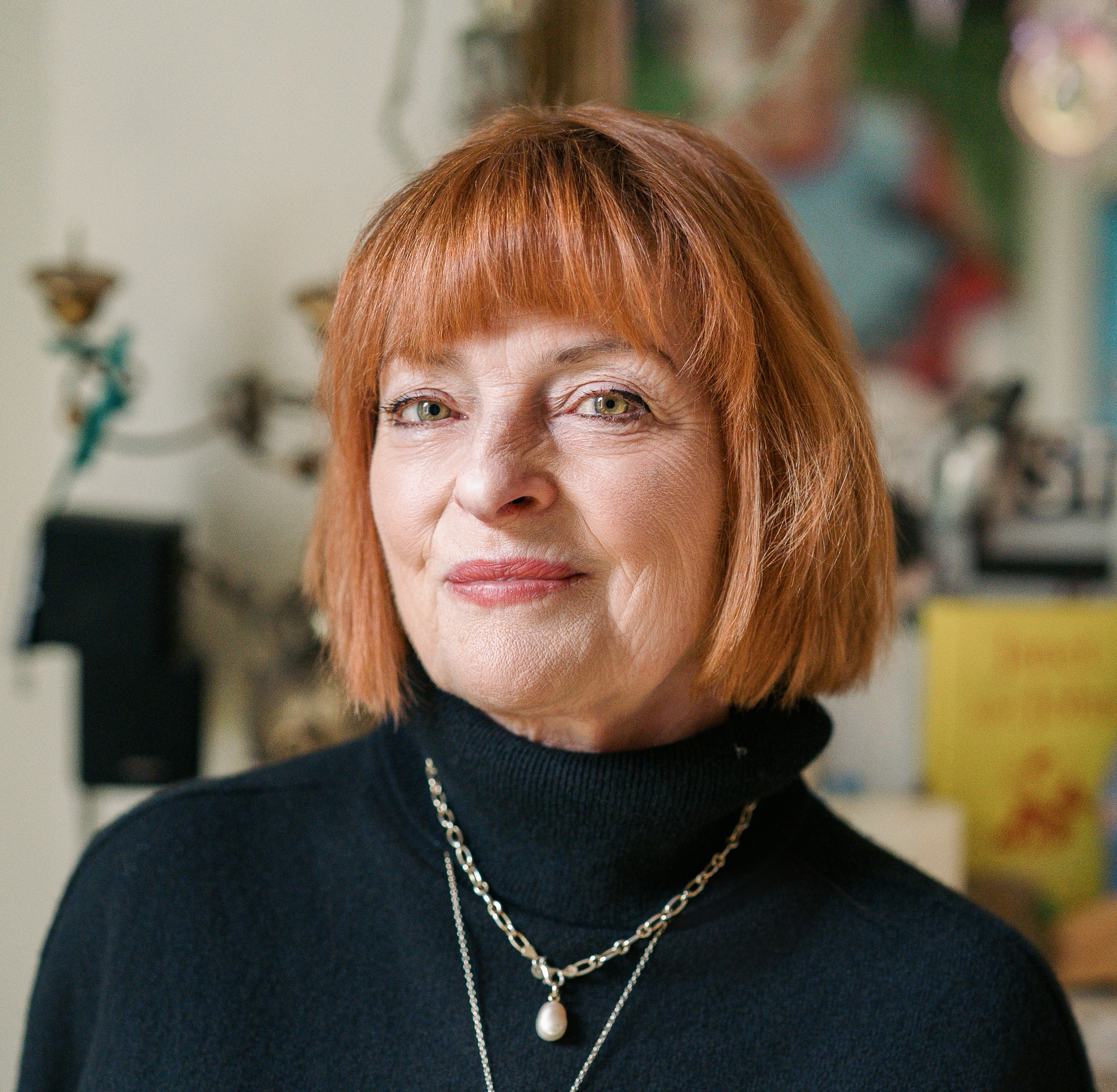
President of Humanists UK, Novelist & Broadcaster
Janet Ellis MBE is a writer, broadcaster and actor, and President of Humanists UK. Trained at the Royal Central School of Speech and Drama, she became a household name presenting Jigsaw and then Blue Peter (1983 to 1987), and has since worked widely across television, radio and theatre. She is the author of two novels, The Butcher's Hook (2016), selected for The Observer's New Faces of Fiction, and How It Was (2019), both published by Two Roads, and hosts the podcast Twice Upon A Time, talking to guests about the books that shaped their childhoods. A Humanists UK patron since 2014, she became the charity's President in January 2026. She was appointed MBE in 2016 for services to theatre and charity.